Asbestos Testing in Baton Rouge, LA
If you suspect asbestos but are not sure, professional sampling and laboratory analysis can confirm whether the material actually contains asbestos.
Confirming what you are dealing with
Many homeowners and property managers in Baton Rouge contact us because they have spotted a material they are concerned about, an older floor, a textured ceiling, some pipe insulation, and they want to know whether it actually contains asbestos. Appearance alone is not enough to tell. Testing is how you move from suspicion to a clear answer.
Testing is worth considering any time you are planning work that will disturb a material, any time a material is damaged, or any time you simply want to know what is in a property you own or manage.
Common reasons to test
- Before a renovation or remodeling project
- Before demolition of all or part of a building
- When a material is cracked, crumbling, or water-damaged
- When buying or managing an older property
- Before replacing old flooring
Materials we are often asked to sample
Asbestos was used in a wide range of building materials. In older Baton Rouge homes and commercial buildings, these are the materials we sample most often.
Flooring
Vinyl and asphalt floor tiles, sheet vinyl, and the backing or adhesive beneath them.
Ceilings
Popcorn and textured ceiling finishes and the joint compound used on drywall seams.
Insulation
Pipe and boiler insulation, particularly on older heating systems.
Siding
Cement-based siding and shingles found on many older homes.
Roofing
Roofing felts, coatings, and sealants used on older flat and low-slope roofs.
Other materials
Cement board, textured paints, and patching compounds.
A careful, controlled sample
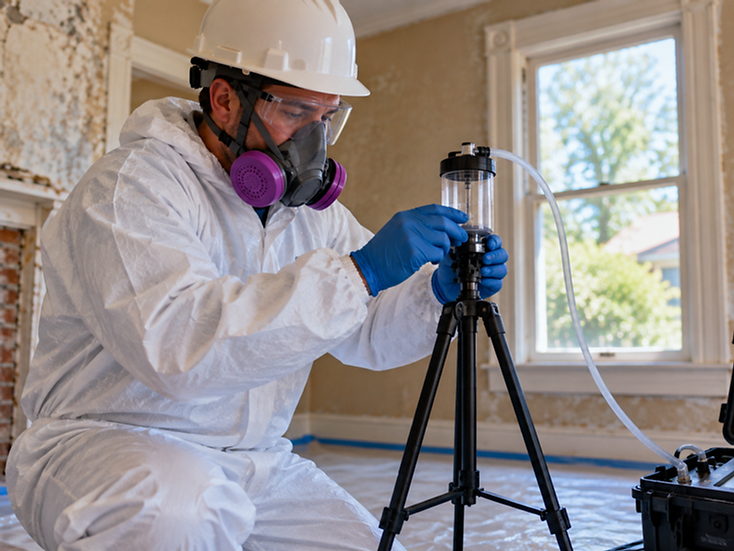
Sampling is done carefully and wet to keep fibers from becoming airborne. A small portion of the suspect material is collected, sealed, and sent to a laboratory for analysis. The process is quick for you, and the area is cleaned up afterward.
We do not promise instant or guaranteed results. Laboratory analysis takes the time it takes, and we will give you a clear expectation of when you will hear back.
What a positive result means
A positive result does not automatically mean the material has to come out. If it is in good condition and will not be disturbed, it can sometimes be managed in place. If it is damaged or in the path of a renovation, removal or encapsulation is usually the next step.
We help you read the results in plain language and decide what, if anything, to do next.
Do not take your own sample
Collecting a sample means disturbing the material, which is exactly what can release fibers. Unless you have specific guidance and the right precautions, leave sampling to a professional. If you are planning to disturb a material anyway, have it tested first so you know what you are dealing with before work begins.
What testing leads to
Testing is usually the first step. These services often follow.
Ready to address asbestos on your property?
Call now or request a quote online. We'll help you understand the right next step for your home or commercial property.
Get started on your project
Tell us about your property and what you are planning. We will help you determine the right next step.
Call us directly at (225) 422-7157
Or fill out the form and we will follow up